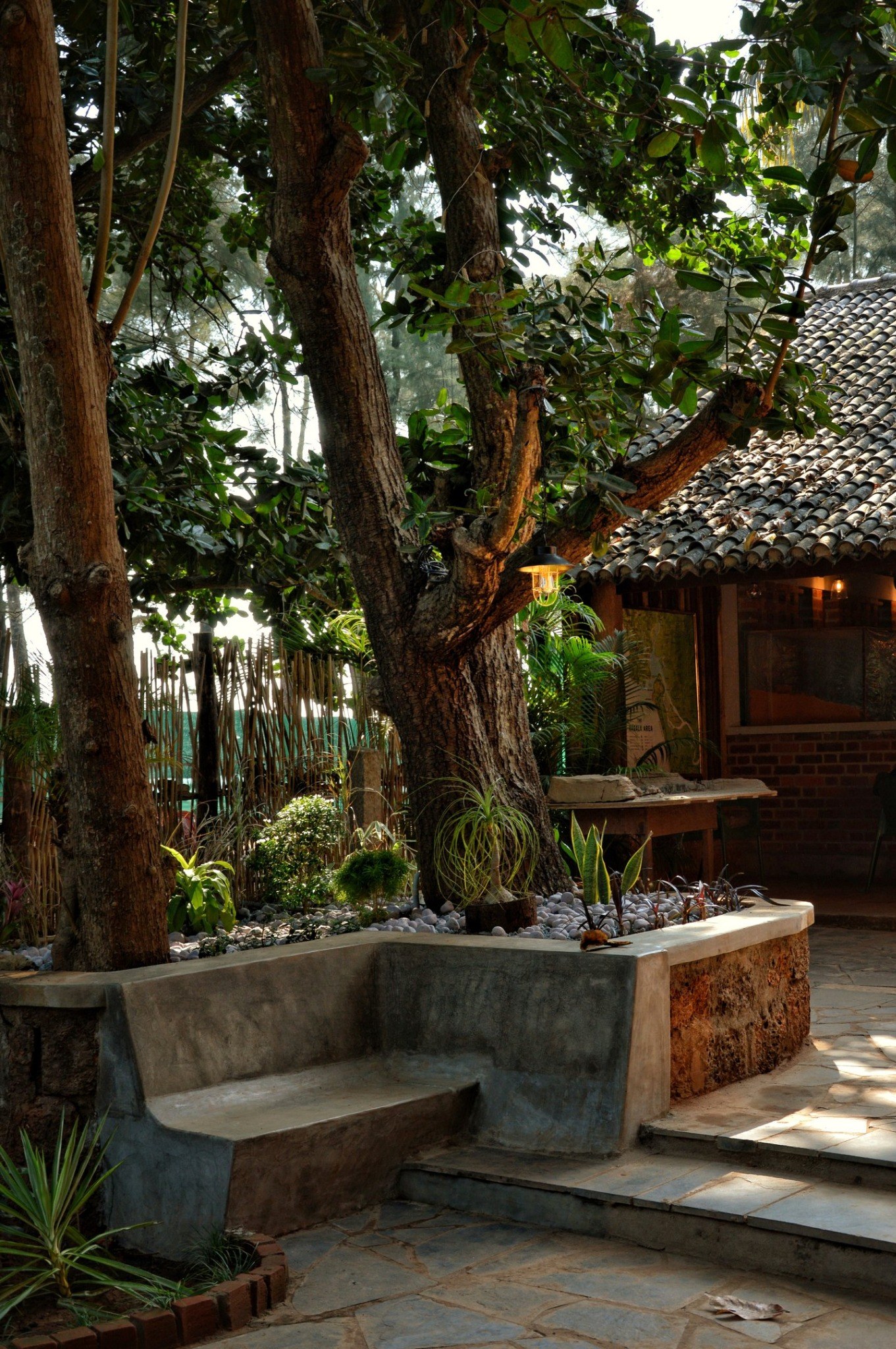
Panchabhuta transforms an existing conservation foundation into a small eco resort rooted in rewilding, local enterprise and the coastal landscape of Kumta. Its spaces combine laterite, bamboo, thatch, bottle masonry and oxide finishes with construction techniques developed from materials and skills available nearby.
From Conservation Foundation to Eco Resort
The project began with the revival of the Panchabhuta Conservation Foundation, an organisation established around ecological conservation and the biodiversity of the Aghanashini estuary. The existing campus was gradually adapted into a boutique resort that could support this work through responsible tourism, local experiences and the sale of small batch products such as kokum butter, natural soaps and mosquito repellent.
Rewilding shaped the project beyond its material choices. The intention was to bring guests into closer contact with the river, beach, forest and agricultural landscape while allowing the retreat to generate income without disconnecting the foundation from its environmental purpose. Existing trees were retained, and the built spaces were planned to maintain a close relationship between sheltered interiors and the surrounding landscape.
Building with the Immediate Landscape
Developed during the pandemic, Panchabhuta relied on an ultra local approach to materials and construction. Laterite blocks, bamboo, thatch, terracotta, recycled timber, stone and earth based finishes were sourced from the region around the beach town. These materials respond to the coastal climate while giving the rooms, restaurant and shared spaces a tactile character drawn from their setting.
The resort maintains a free flow between indoor and outdoor areas. Roofed spaces remain open to air and landscape where possible, while verandahs, balconies and framed views connect the rooms to the beach, paddy fields and tree cover. Oxide plaster and floors introduce colour without masking the natural texture of the walls and structural materials.
The Bamboo Imprint Slab
A defining construction detail is the bamboo imprint slab, developed by using locally sourced bamboo as temporary support beneath the concrete. Once the bamboo was removed, its irregular geometry remained imprinted on the soffit like a fossil. The technique reduced the quantity of concrete required while turning the construction process into the finished ceiling surface.
The slabs express the project’s wider approach: natural materials are used according to their structural and practical value, and traces of making are retained rather than concealed. Raw structural surfaces are paired with carefully finished interiors, allowing the resort to feel comfortable without losing the directness of its construction.
Light Through Bottle Masonry
In the bathrooms, discarded glass bottles are incorporated into the masonry walls. Their circular ends filter daylight into the interiors, producing soft areas of coloured and diffused light while reusing material that would otherwise become waste. The bottle walls work alongside skylights, oxide surfaces and local stone to make compact service spaces feel open and naturally lit.
Each room is named after a river of Uttara Kannada, extending the connection between the retreat and its wider ecological setting. Material details, views and daylight distinguish the rooms while maintaining a common language across the property.
Craft Knowledge and Local Livelihoods
The construction process involved local craftspeople and created opportunities to develop skills in oxide plaster, thatched roofing, bamboo work and other regionally relevant techniques. Working with nearby makers kept knowledge and expenditure within the area while reviving practices that remain well suited to the local climate.
The social programme continues through support for local tours, fishing and food networks, as well as products made by women from the surrounding community. Architecture, hospitality and conservation therefore operate as connected parts of the project. Panchabhuta uses the resort not as an isolated destination, but as a means of sustaining ecological work and local enterprise through everyday occupation of the place.